
Construction projects generate significant amounts of waste throughout every phase of development. Demolition materials, packaging, scrap metal, wood, concrete, drywall, and other debris can quickly accumulate, creating safety hazards and slowing project progress if not managed effectively.
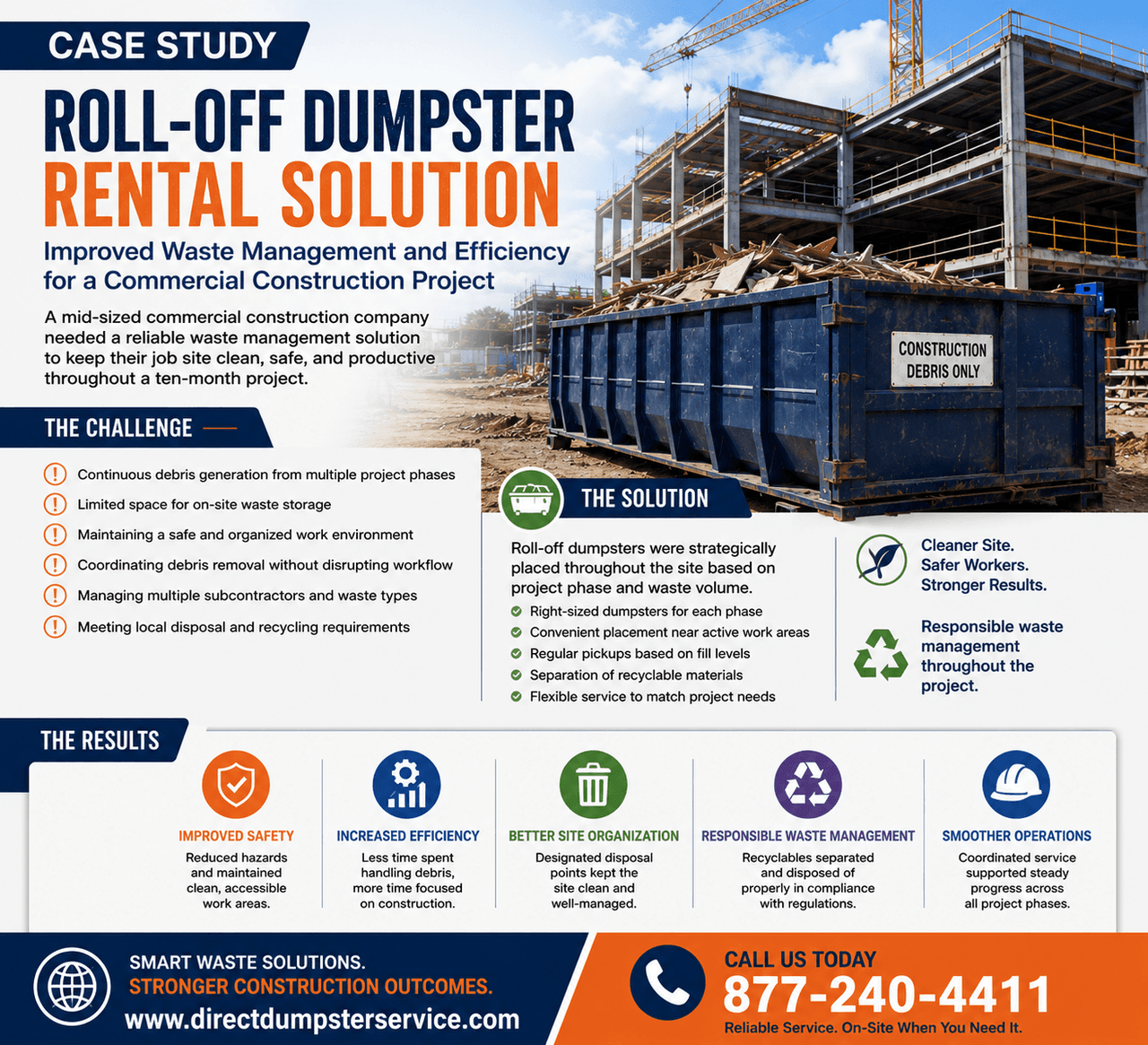
This case study examines how roll-off dumpster rentals supported waste management, site organization, and operational efficiency during a mid-sized commercial construction project that lasted approximately ten months.
The Challenge
The project involved site preparation, foundation work, structural construction, interior finishing, and landscaping. Each phase generated different types and volumes of construction debris, making waste management a critical part of daily operations.
Project managers identified several challenges before construction began:
Continuous generation of construction debris
Limited space for temporary waste storage
Maintaining safe working conditions
Coordinating debris removal without interrupting construction activities
Managing multiple subcontractors working simultaneously
Complying with local waste disposal requirements
Without a structured waste management plan, debris accumulation could have reduced worker productivity, created trip hazards, and delayed project milestones.
Planning the Solution
Project planners incorporated roll-off dumpsters into the site's overall logistics strategy. Waste containers were selected based on anticipated debris volumes during each stage of construction.
Planning considerations included:
Estimated waste generation by project phase
Available space for dumpster placement
Vehicle access for scheduled pickups
Separation of recyclable and non-recyclable materials
Worker safety and traffic flow
Accessibility for subcontractors operating in different work areas
Dumpsters were positioned near active construction zones while maintaining clear access routes for heavy equipment and emergency vehicles.
Implementation
Roll-off dumpsters were delivered before major construction activities began and relocated as work progressed across the site.
Separate containers were used for different waste streams when appropriate, including:
Concrete and masonry debris
Wood and lumber scraps
Metal materials
Drywall waste
General construction debris
Packaging materials
Routine waste collection schedules helped prevent containers from exceeding capacity while keeping work areas clean and organized.
Site supervisors monitored dumpster usage throughout the project and coordinated pickups based on changing construction activities rather than fixed intervals.
Results
Improved Site Organization
Strategically placed dumpsters reduced scattered debris and provided workers with convenient disposal locations, resulting in cleaner work areas throughout the project.
Enhanced Worker Safety
Regular debris removal minimized trip hazards and improved access to equipment, storage areas, and construction materials. Cleaner work zones supported a safer environment for employees and subcontractors.
Increased Operational Efficiency
Having designated waste collection points reduced time spent transporting debris across the site, allowing crews to focus on construction activities instead of waste handling.
Better Waste Management
Separating recyclable materials from general construction waste simplified disposal processes and supported responsible waste management practices throughout the project.
Streamlined Project Operations
Coordinated dumpster placement and scheduled waste removal reduced workflow interruptions and helped maintain consistent progress across multiple construction phases.
Key Takeaways
The project highlighted several best practices for construction waste management:
Estimate debris volumes before construction begins.
Select dumpster sizes appropriate for each project phase.
Position containers near active work areas while maintaining safe traffic flow.
Separate recyclable materials whenever practical.
Monitor fill levels regularly to prevent overflow.
Coordinate pickups based on construction progress rather than fixed schedules.
Integrate waste management into the overall site logistics plan.
Conclusion
This case study demonstrates that roll-off dumpster rentals play an essential role in modern construction site management. By providing organized waste collection, supporting worker safety, and improving operational efficiency, roll-off dumpsters help construction teams maintain cleaner and more productive job sites.
As commercial construction projects continue to increase in complexity, effective debris management remains a key factor in successful project execution. Incorporating roll-off dumpster rentals into construction planning supports safer working conditions, streamlined operations, and responsible waste management from site preparation through final project completion.