
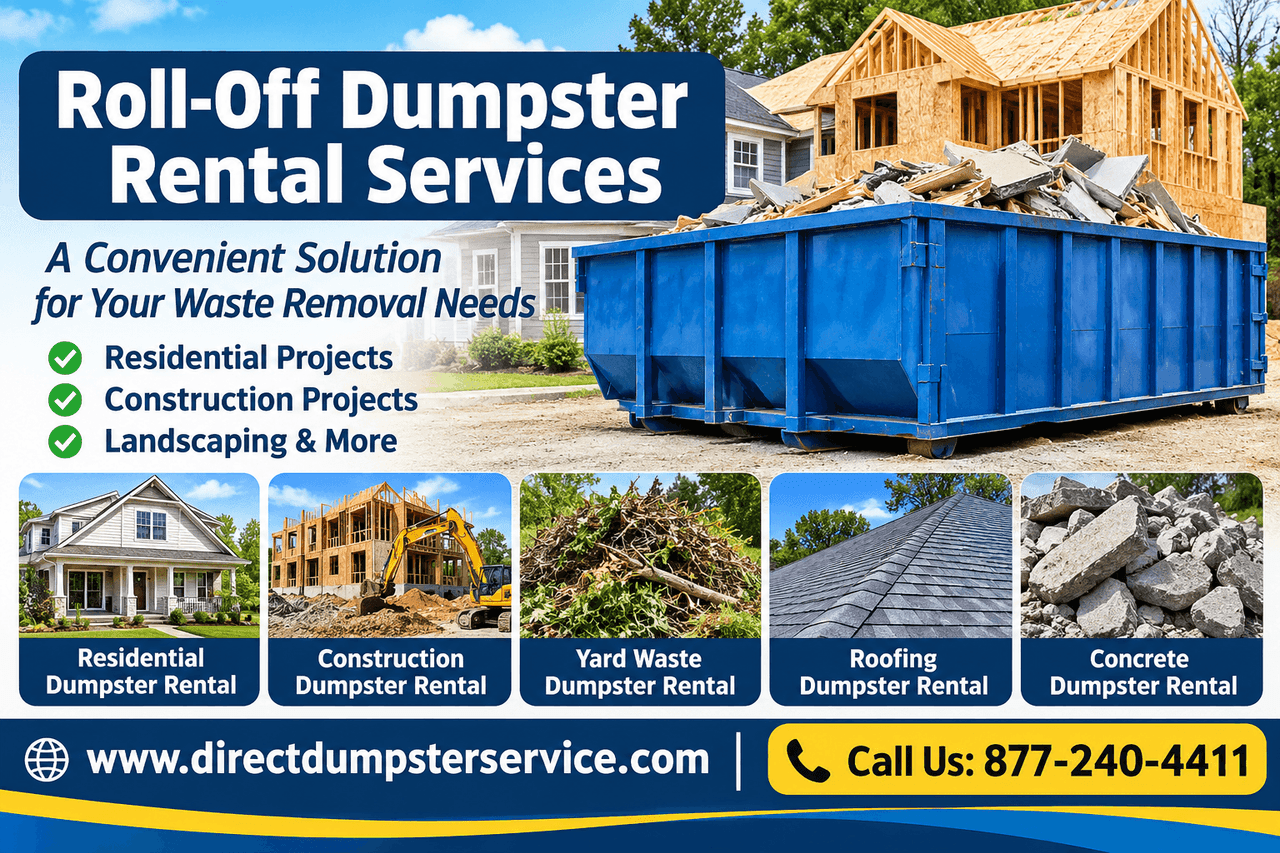
Roll-off dumpster rental services provide a practical waste management solution for residential, commercial, landscaping, and construction projects. These dumpsters are designed to handle different types of waste, including household junk, construction debris, yard waste, roofing materials, and concrete. Choosing the appropriate dumpster depends on the type of project, the amount of waste generated, available space, and local disposal requirements.
Understanding the different types of roll-off dumpster rentals helps homeowners, contractors, and property managers organize waste removal safely and efficiently.
Residential Dumpster Rental
Residential dumpster rentals are commonly used for home improvement, remodeling, cleaning, and property maintenance projects. Homeowners may need temporary waste containers when clearing out garages, renovating kitchens, replacing flooring, cleaning basements, or preparing properties for sale.
Household projects can generate different types of waste, such as old furniture, broken appliances, packaging materials, wood, drywall, and general household debris. A roll-off dumpster provides a centralized location for collecting these materials instead of allowing waste to accumulate around the property.
Common residential applications include:
- Home renovation and remodeling projects.
- Garage, basement, and attic cleanouts.
- Furniture and household junk removal.
- Moving and property cleanups.
- Estate cleanouts and property preparation.
Selecting the right dumpster size helps prevent overfilling and reduces unnecessary disposal trips.
Construction Dumpster Rental
Construction dumpster rentals are used for managing debris generated during building, renovation, demolition, and remodeling projects. Construction sites can produce substantial amounts of waste, making proper disposal an important part of project organization and workplace safety.
Typical construction debris includes lumber, drywall, insulation, roofing materials, metal scraps, flooring, broken fixtures, and other building materials. Contractors often need dumpsters that can accommodate changing waste volumes throughout different project stages.
Common construction applications include:
- Residential and commercial construction.
- Building demolition and renovation.
- Interior remodeling and reconstruction.
- Drywall and flooring removal.
- Commercial property improvements.
Proper waste separation is important because certain materials require specialized disposal. Keeping construction debris organized also helps maintain accessible work areas and reduces potential safety hazards.
Yard Waste Dumpster Rental
Yard waste dumpster rentals are useful for landscaping, gardening, outdoor maintenance, and property cleanup projects. Seasonal changes, storm damage, tree trimming, and landscape renovations can generate large quantities of organic waste.
Common yard waste materials include tree branches, leaves, grass clippings, shrubs, bushes, small tree trunks, and other landscaping debris. Collecting these materials in a designated container helps keep outdoor areas clean and organized.
Common yard waste applications include:
- Tree trimming and branch removal.
- Lawn and garden renovations.
- Leaf and grass cleanup.
- Landscaping and property maintenance.
- Storm-related yard debris removal.
Before placing yard waste in a dumpster, it is important to understand local disposal rules. Some facilities require organic materials to be separated from general construction and household waste.
Roofing Dumpster Rental
Roofing dumpster rentals are designed to manage waste generated during roof replacement, repair, and installation projects. Roofing work can produce heavy debris in a relatively short period, particularly when removing multiple layers of old roofing materials.
Common roofing waste includes asphalt shingles, roofing felt, underlayment, damaged flashing, nails, wood scraps, and other removed roofing components.
Common roofing applications include:
- Residential roof replacement.
- Commercial roofing projects.
- Asphalt shingle removal.
- Roof repairs and renovations.
- Large-scale roofing maintenance.
Roofing materials can become extremely heavy when collected in large quantities. Contractors should consider dumpster weight limits, the estimated volume of shingles, and placement requirements before selecting a container. Overloading a dumpster can create transportation and disposal problems.
Concrete Dumpster Rental
Concrete dumpster rentals are used for projects involving the removal of heavy construction materials. Concrete is significantly heavier than ordinary household or construction debris, so proper container selection and weight management are essential.
These dumpsters are commonly needed for demolition, driveway replacement, sidewalk repairs, foundation work, and other concrete removal projects.
Common concrete disposal applications include:
- Driveway and sidewalk demolition.
- Concrete patio removal.
- Foundation and slab removal.
- Parking lot reconstruction.
- Concrete steps and walkway replacement.
Concrete should generally be separated from mixed construction debris because recycling facilities and disposal sites may have specific requirements. Contractors should also verify the dumpster's maximum weight capacity before loading heavy materials.
How to Choose the Right Roll-Off Dumpster Rental
Choosing an appropriate dumpster requires evaluating several project-related factors.
1. Type of waste: Identify whether the project involves household junk, construction debris, yard waste, roofing shingles, or concrete.
2. Waste volume: Estimate how much material the project will generate.
3. Material weight: Heavy materials such as concrete and roofing shingles require additional weight considerations.
4. Available space: Check whether the property or construction site has sufficient room for dumpster placement and pickup.
5. Rental duration: Consider how long the project will take and how frequently waste will be generated.
6. Disposal regulations: Review local restrictions concerning prohibited materials, recycling, and waste separation.
Roll-off dumpster rental services support different types of residential, construction, landscaping, roofing, and concrete disposal projects. Each category has specific requirements based on waste volume, material weight, and disposal methods. Understanding these differences helps homeowners, contractors, and property managers select suitable waste containers, maintain organized work areas, and manage debris responsibly throughout their projects.
Roll-Off Dumpster Rental Services – Frequently Asked Questions (FAQs)
1. What is a roll-off dumpster rental?
A roll-off dumpster is a large waste container delivered to a property or project site using a specialized truck. It is commonly used for collecting and transporting waste from construction, renovation, landscaping, demolition, and cleanup projects.
2. How do I determine what size dumpster I need?
Dumpster size depends on the amount and type of waste generated. Small home cleanouts may require a smaller container, while large construction and demolition projects generally require larger capacities. Heavy materials also require consideration of weight limits.
3. How long can I keep a roll-off dumpster?
The rental period depends on the rental agreement and project requirements. Short-term projects may need a few days, while construction and renovation work may require several weeks.
4. Can I mix different types of waste in one dumpster?
Some general debris can be combined, but certain materials must be separated. Concrete, yard waste, roofing shingles, hazardous materials, and recyclable items may have different disposal requirements.
5. What materials are not allowed in roll-off dumpsters?
Commonly restricted materials include chemicals, paint, batteries, pesticides, fuel, asbestos, medical waste, and other hazardous substances. Restrictions vary by disposal facility and local regulations.
6. Where should a roll-off dumpster be placed?
A dumpster can generally be placed on a driveway, construction site, or designated property area. The location should provide sufficient space for delivery, loading, and pickup without blocking access or creating safety hazards.
7. When should homeowners consider renting a residential dumpster?
Homeowners may need a dumpster during major cleanouts, home renovations, moving, estate cleanups, flooring replacement, or landscaping improvements when ordinary household garbage collection cannot handle the waste volume.
8. Can I put old furniture and mattresses in a residential dumpster?
Many residential dumpsters accept furniture and mattresses, but acceptance depends on local disposal regulations. Some facilities charge additional fees or have special requirements for mattresses and upholstered furniture.
9. Can construction debris from a home renovation go into a residential dumpster?
Materials such as drywall, wood, flooring, and cabinets may be accepted. However, heavy materials such as concrete, bricks, and roofing shingles may require separate containers or special disposal arrangements.
10. How can I avoid overfilling a residential dumpster?
Estimate the waste volume before loading, break down large items when possible, distribute materials evenly, and keep debris below the designated fill line. Overfilled containers may not be safe for transportation.
11. Is a residential dumpster suitable for a complete house cleanout?
Yes. A residential dumpster can handle many household items generated during a complete cleanout, including furniture, boxes, damaged fixtures, and general junk. The required capacity depends on the property's size and the amount of accumulated material.
12. What types of construction materials can go into a construction dumpster?
Common accepted materials include lumber, drywall, insulation, flooring, metal scraps, broken cabinets, and general construction debris. Acceptance depends on the container type and disposal facility.
13. How frequently should construction dumpsters be emptied?
The frequency depends on project size, waste generation, and available container capacity. Busy construction sites may require more frequent exchanges, while smaller renovation projects may need only one removal.
14. Can contractors use one dumpster for demolition and construction waste?
It depends on the materials being removed. Mixed construction debris may be accepted in one container, but concrete, soil, hazardous materials, and certain recyclable materials may need separate disposal arrangements.
15. What problems can occur when construction debris is not managed properly?
Unmanaged debris can block walkways, create tripping hazards, restrict equipment movement, delay construction activities, and make it difficult to maintain an organized worksite.
16. How can construction companies estimate dumpster requirements?
Contractors should evaluate the building area, demolition scope, material types, estimated debris volume, and project schedule. Breaking the project into stages can help determine the number and size of containers needed.
17. What types of yard waste can be placed in a yard waste dumpster?
Common materials include leaves, grass clippings, branches, shrubs, bushes, and certain landscaping debris. Local disposal facilities may have restrictions on soil, tree stumps, and other organic materials.
18. Can tree branches and large logs go into a yard waste dumpster?
Many yard waste containers accept branches and smaller logs. However, oversized tree trunks, heavy logs, and large stumps may have size or weight restrictions.
19. Can soil and dirt be mixed with regular yard waste?
Not always. Soil and dirt are considerably heavier than leaves and grass clippings. Many disposal facilities require these materials to be handled separately.
20. What is the best way to prepare yard waste before loading?
Cut large branches into manageable sections, separate recyclable organic materials when required, and distribute the waste evenly. Avoid mixing prohibited materials with organic debris.
21. Can storm-damaged tree debris be placed in a yard waste dumpster?
Branches, leaves, and other accepted vegetation from storm cleanup may be placed in a yard waste dumpster. However, materials mixed with household junk, construction debris, or contaminated waste may require separate handling.
22. What materials are commonly accepted in roofing dumpsters?
Accepted materials may include asphalt shingles, roofing felt, underlayment, flashing, and small amounts of related roofing debris. Specific acceptance rules depend on the disposal facility.
23. How do I estimate dumpster size for a roof replacement?
Consider the roof's square footage, roofing material, number of existing shingle layers, and expected demolition waste. Asphalt shingles are heavy, so weight capacity is just as important as dumpster volume.
24. Can multiple layers of shingles go into one roofing dumpster?
Multiple layers may be accepted, but they significantly increase the total weight. Contractors should calculate the expected weight and verify the container's limits before loading.
25. Why is weight important when renting a roofing dumpster?
Roofing materials can become very heavy even when they do not completely fill the container. Exceeding the allowed weight can create transportation risks and additional disposal charges.
26. Can wood and metal roofing materials be mixed with shingles?
Some disposal facilities accept mixed roofing debris, while others require separation for recycling. Checking material restrictions before disposal helps avoid contamination issues.
27. Why does concrete require a specialized dumpster?
Concrete is extremely heavy compared with ordinary household and construction debris. Specialized containers and weight restrictions help ensure safe loading, transportation, and disposal.
28. Can broken concrete be mixed with bricks and asphalt?
Some facilities accept clean concrete, bricks, and asphalt together, while others require separate materials. Local recycling and disposal guidelines determine what can be combined.
29. How should concrete be loaded into a dumpster?
Concrete should be distributed evenly across the container floor. Avoid concentrating heavy pieces in one area, exceeding the fill line, or loading beyond the permitted weight capacity.
30. Can reinforced concrete be placed in a concrete dumpster?
Some facilities accept reinforced concrete containing steel rebar, while others require the metal to be separated. Confirm acceptance requirements before beginning demolition.
31. Can dirt and concrete be disposed of in the same dumpster?
This depends on the disposal facility. Dirt and concrete have different recycling and processing requirements, and combining them may make recycling more difficult.
32. Is concrete suitable for recycling after removal?
Yes. Clean concrete is commonly crushed and processed into recycled aggregate for road construction, drainage applications, and other construction uses. Contamination and local facility requirements can affect acceptance.
33. What happens if a dumpster becomes full before the project is completed?
When a dumpster reaches capacity, additional waste should not be placed above the fill line. A container exchange or additional dumpster may be necessary, depending on the project requirements.
34. Can a dumpster damage a residential driveway?
Heavy dumpsters can potentially damage asphalt, concrete, or other surfaces. Surface protection, appropriate placement, and weight considerations can help reduce the risk.
35. Do I need a permit to place a roll-off dumpster?
A permit may be required when placing a dumpster on public streets, sidewalks, or other public property. Requirements vary by city and municipality. Private-property placement may have different rules.
36. What should I do before a dumpster is delivered?
Clear the placement area, check overhead obstructions, ensure truck access, confirm placement dimensions, and review any permit or property restrictions.
37. How can waste be separated for responsible disposal?
Separate recyclable materials, clean concrete, yard waste, metal, household junk, and general construction debris whenever possible. Proper separation can improve recycling opportunities and reduce contamination.
38. What is the difference between dumpster volume and weight capacity?
Volume refers to how much physical space the container provides, usually measured in cubic yards. Weight capacity refers to the maximum allowable load. Both factors matter when selecting a dumpster, especially for concrete and roofing projects.