
Case Study:
Residential cleanup projects often generate more waste than standard household trash collection services can handle. Whether homeowners are renovating a kitchen, replacing roofing materials, clearing out a garage, landscaping a yard, or preparing a property for sale, managing debris efficiently becomes an important part of the project.
Selecting the appropriate roll-off dumpster size helps improve workflow, reduce unnecessary waste accumulation, and maintain a cleaner, safer work environment. This case study examines how different roll-off dumpster sizes—10-yard, 20-yard, 30-yard, and 40-yard containers—can meet a variety of residential waste disposal needs.
Background
A suburban neighborhood experienced an increase in home improvement projects during the spring and summer months. Four homeowners were undertaking different residential projects, each producing varying amounts and types of debris.
Rather than relying on multiple trips to local disposal facilities, each homeowner evaluated the amount of waste expected and selected a dumpster size based on project scope, available space, and anticipated debris volume.
The objective was to identify the most practical dumpster size for each project while minimizing disruptions to daily household activities.
Residential Project 1: Garage Cleanout and Small Remodeling
The first homeowner planned to clean out a two-car garage while removing old shelving, broken furniture, cardboard boxes, unused household items, and a small amount of drywall from a laundry room renovation.
Recommended Size: 10-Yard Roll-Off Dumpster
The 10-yard dumpster provided adequate capacity for a relatively small volume of mixed household debris.
Typical materials included:
Old furniture
Shelving units
Cardboard
Yard waste
Small renovation debris
Household clutter
Because of its compact footprint, the container fit comfortably in the driveway without occupying excessive space.
Outcome
The homeowner completed the cleanup over a weekend without requiring additional waste removal trips. The project remained organized, and debris was contained in one location throughout the renovation.
Residential Project 2: Kitchen Renovation
The second homeowner completed a full kitchen remodel involving cabinet removal, countertops, flooring, drywall replacement, and outdated appliances.
Recommended Size: 20-Yard Roll-Off Dumpster
The 20-yard dumpster offered additional capacity for heavier construction debris generated during demolition.
Common waste materials included:
Wooden cabinets
Countertops
Flooring materials
Drywall
Insulation
Packaging materials
The larger container allowed demolition work to continue without interruptions caused by limited disposal space.
Outcome
The remodeling crew maintained a cleaner worksite, reducing trip hazards while simplifying daily cleanup activities.
Residential Project 3: Whole-Home Interior Renovation
The third homeowner renovated multiple rooms simultaneously, including bathrooms, bedrooms, flooring, ceilings, and interior walls.
The project generated significant amounts of demolition debris over several weeks.
Recommended Size: 30-Yard Roll-Off Dumpster
A 30-yard dumpster accommodated the larger volume of waste produced during extensive interior renovations.
Materials included:
Carpet
Wood flooring
Doors
Trim
Drywall
Bathroom fixtures
Cabinets
Lumber
Its increased capacity reduced the need for multiple container exchanges during the project.
Outcome
Workers were able to dispose of demolition materials as rooms were completed, helping maintain an organized jobsite while improving efficiency throughout the renovation schedule.
Residential Project 4: Major Property Renovation and Landscaping
The fourth homeowner combined several large projects into one renovation, including roof replacement, deck demolition, extensive landscaping, fence removal, and interior remodeling.
The project generated bulky materials and a substantial amount of debris over several weeks.
Recommended Size: 40-Yard Roll-Off Dumpster
The 40-yard dumpster offered the largest available capacity for handling mixed residential construction and demolition waste.
Materials included:
Roofing shingles
Lumber
Fence panels
Tree branches
Deck materials
Drywall
Large furniture
Landscaping debris
Its high capacity reduced interruptions while accommodating debris from several contractors working simultaneously.
Outcome
The larger container minimized overflow concerns and supported efficient waste collection throughout each phase of the project.
Comparing Residential Dumpster Sizes
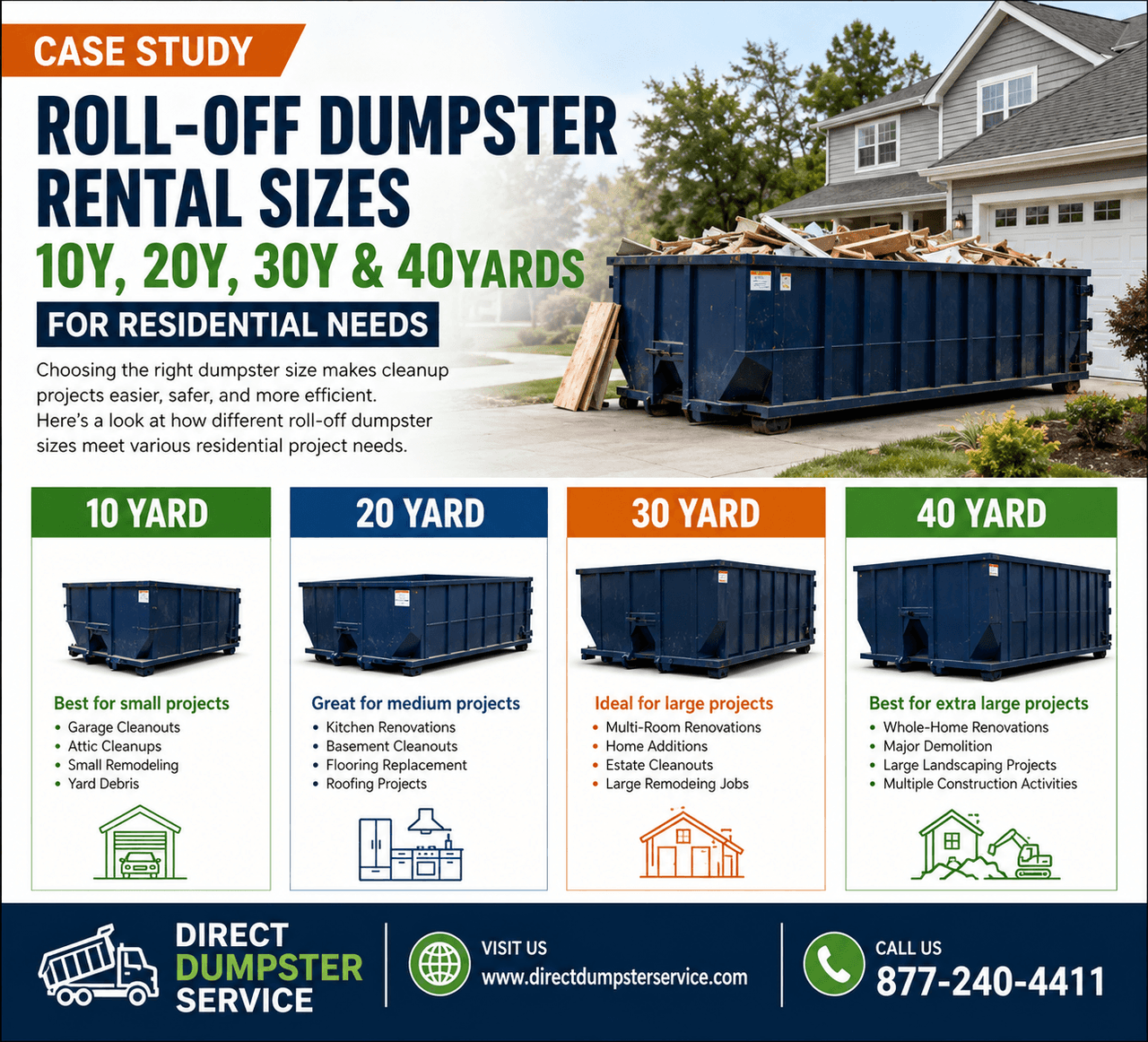
Dumpster Size Typical Residential Uses
10-Yard Garage cleanouts, attic cleanups, small remodeling projects, yard debris
20-Yard Kitchen renovations, basement remodeling, flooring replacement, roofing projects
30-Yard Multi-room renovations, home additions, estate cleanouts, larger remodeling jobs
40-Yard Whole-home renovations, major demolition, large landscaping projects, multiple construction activities
Each size serves different project requirements, making it important to estimate debris volume before selecting a container.
Factors Considered Before Choosing a Dumpster
The homeowners evaluated several factors before selecting a dumpster size:
Project duration
Type of debris
Estimated waste volume
Available driveway or property space
Local placement requirements
Accessibility for loading
Number of workers involved
Considering these factors helped ensure each project had adequate waste disposal capacity without unnecessary complications.
Benefits of Matching Dumpster Size to the Project
Selecting an appropriately sized dumpster contributed to several operational advantages:
Improved organization during renovations
Reduced debris accumulation around the property
Safer walking and working conditions
More efficient cleanup throughout the project
Fewer interruptions caused by waste overflow
Better management of construction materials
Simplified disposal of bulky household items
Proper waste planning also helped homeowners maintain cleaner outdoor spaces during extended renovation periods.
Lessons Learned
Residential projects vary greatly in the amount and type of waste they generate. Small cleanup jobs generally require less capacity than full-home renovations or demolition projects.
Estimating debris volume before beginning work allows homeowners to choose a dumpster that supports efficient waste management throughout the project. Selecting a container that is too small may require additional hauling or container exchanges, while selecting one that is unnecessarily large may not make the best use of available space.
Understanding the typical applications for 10-yard, 20-yard, 30-yard, and 40-yard dumpsters enables homeowners to better match container capacity with project requirements.
Conclusion
Roll-off dumpsters play an important role in residential construction, remodeling, cleanouts, and landscaping projects by providing a centralized location for waste collection. Each dumpster size offers unique advantages depending on the scale of the work being performed.
From small garage cleanouts requiring a 10-yard container to large property renovations benefiting from a 40-yard dumpster, selecting the right size contributes to cleaner worksites, improved safety, and more efficient project completion. Careful planning, accurate waste estimation, and thoughtful placement can help residential projects proceed with fewer disruptions while supporting responsible debris management.