
Background
Labor Day is one of the busiest holiday weekends in the United States, with communities hosting festivals, outdoor concerts, family gatherings, sporting activities, food events, and neighborhood celebrations. These events bring people together, but they can also generate substantial amounts of waste within a short period.
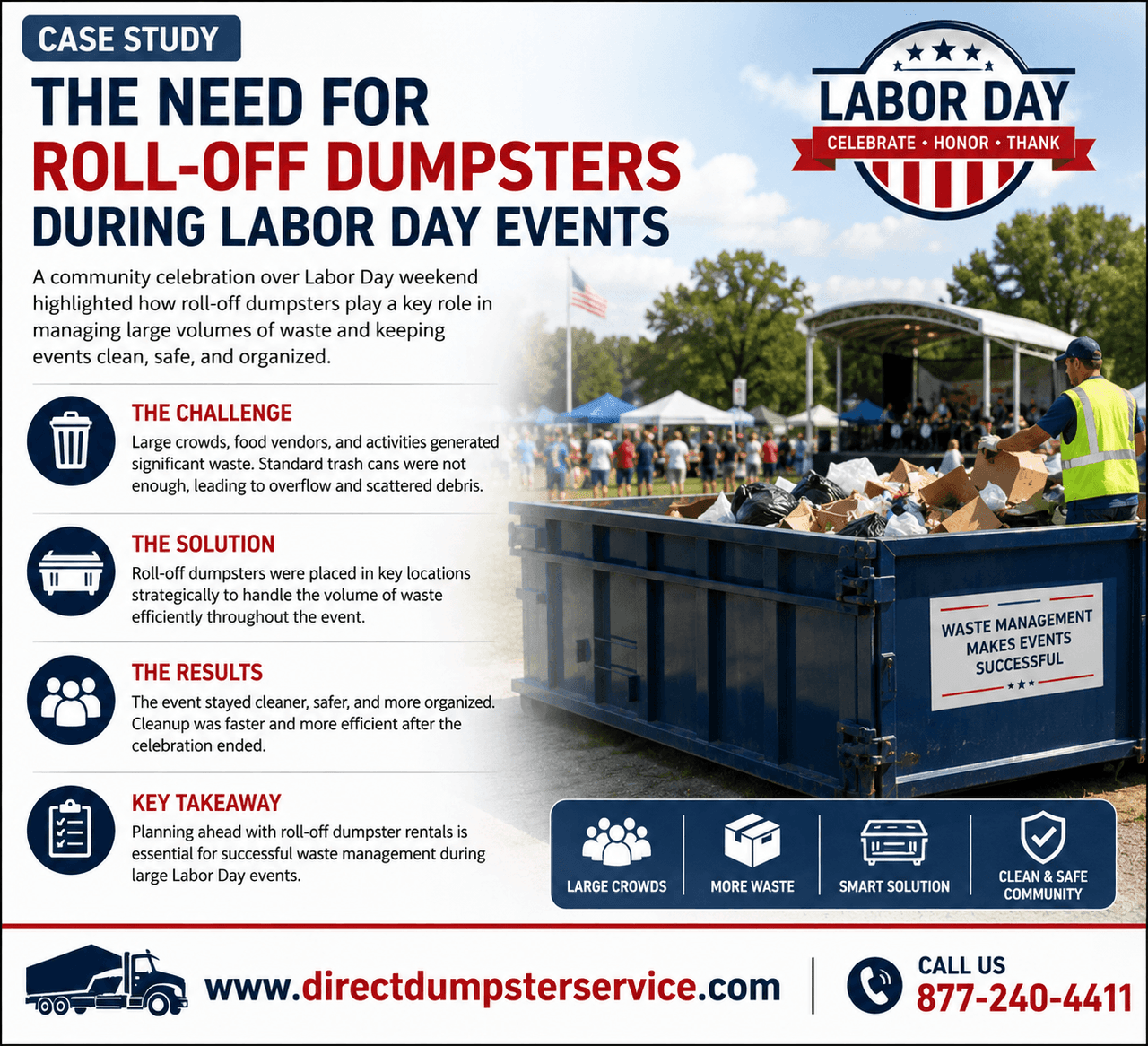
A recent Labor Day community celebration demonstrated the importance of having a structured waste-management plan. The event included food vendors, entertainment areas, temporary seating, children’s activities, and several gathering spaces. Organizers expected a significant increase in visitors throughout the holiday weekend and recognized that existing waste containers would not be sufficient to handle the volume of refuse.
The Waste Management Challenge
Before the event began, organizers reviewed the available waste-collection infrastructure. The venue had several permanent trash receptacles, but these containers were designed for normal daily activity rather than a large holiday gathering.
The anticipated waste included food packaging, disposable plates and cups, cardboard boxes, paper products, event decorations, plastic containers, and general refuse. Food vendors were also expected to produce additional waste throughout the day.
Another concern was the continuous flow of visitors. Waste could accumulate quickly around food-service areas, seating zones, and entertainment spaces if collection points became full. Overflowing containers could create unpleasant conditions and make post-event cleanup more difficult.
Role of Roll-Off Dumpsters
To address the anticipated increase in waste, organizers incorporated roll-off dumpsters into the event's waste-management plan. The dumpsters provided centralized collection points capable of holding considerably more material than standard trash cans.
Their placement was carefully considered based on the layout of the venue. Locations needed to be accessible to event staff and waste-collection vehicles while remaining practical for vendors and cleanup crews. Keeping dumpsters in designated areas also helped prevent waste from accumulating randomly throughout the event grounds.
Rather than relying solely on frequent emptying of small containers, the larger dumpsters provided additional capacity throughout the event period. Smaller trash receptacles could still be positioned throughout the venue for attendees, while collected waste could ultimately be transferred to the larger disposal areas.
Implementation During the Labor Day Event
During the celebration, event personnel monitored waste levels throughout the day. Food and beverage areas received particular attention because these locations generated waste more rapidly than other sections of the venue.
Staff members regularly checked collection points and moved waste toward the designated dumpster areas. This approach helped maintain cleaner public spaces and reduced the likelihood of overflowing containers.
The roll-off dumpsters also supported the work of vendors and cleanup personnel. Cardboard, packaging materials, and other appropriate waste could be consolidated instead of being left around individual booths or activity areas.
Clear communication among organizers, vendors, maintenance workers, and cleanup crews was important. Everyone involved understood where waste needed to be placed and how the designated disposal areas would be managed.
Results
The use of roll-off dumpsters helped the organizers handle the increased volume of waste generated during the Labor Day celebration. Centralized waste collection made it easier for staff to monitor disposal areas and organize cleanup activities.
Public areas remained more manageable during the event, while vendors had designated locations for disposing of accumulated materials. After the celebration, cleanup crews were able to work more efficiently because much of the waste had already been consolidated.
The case also demonstrated that waste management should be considered during the early planning stages of a large holiday event rather than treated as a final cleanup task.
Key Lessons
The Labor Day event highlighted several important considerations for managing waste during large gatherings:
Estimate waste volumes based on expected attendance and event duration.
Consider food vendors and other high-waste activities when planning disposal capacity.
Use centralized collection areas to improve site organization.
Position dumpsters where they are accessible without interfering with guests or event activities.
Coordinate waste procedures with vendors, staff, and cleanup crews.
Monitor waste levels throughout the event instead of waiting until containers become full.
Include post-event cleanup requirements in the initial waste-management plan.
Conclusion
Labor Day celebrations can generate significantly more waste than ordinary days, particularly when large crowds, food vendors, entertainment, and outdoor activities are involved. Standard trash receptacles may not provide enough capacity for these temporary increases.
This case study shows how roll-off dumpsters can become an important part of a coordinated waste-management strategy. By providing larger centralized collection areas and supporting organized cleanup procedures, they can help event planners manage holiday-related waste more effectively.
The experience also reinforces a broader lesson: successful event planning involves preparing not only for guests and activities but also for what remains after the celebration ends. A well-developed waste-management plan can contribute to cleaner public spaces, more efficient cleanup operations, and a more organized Labor Day event.