
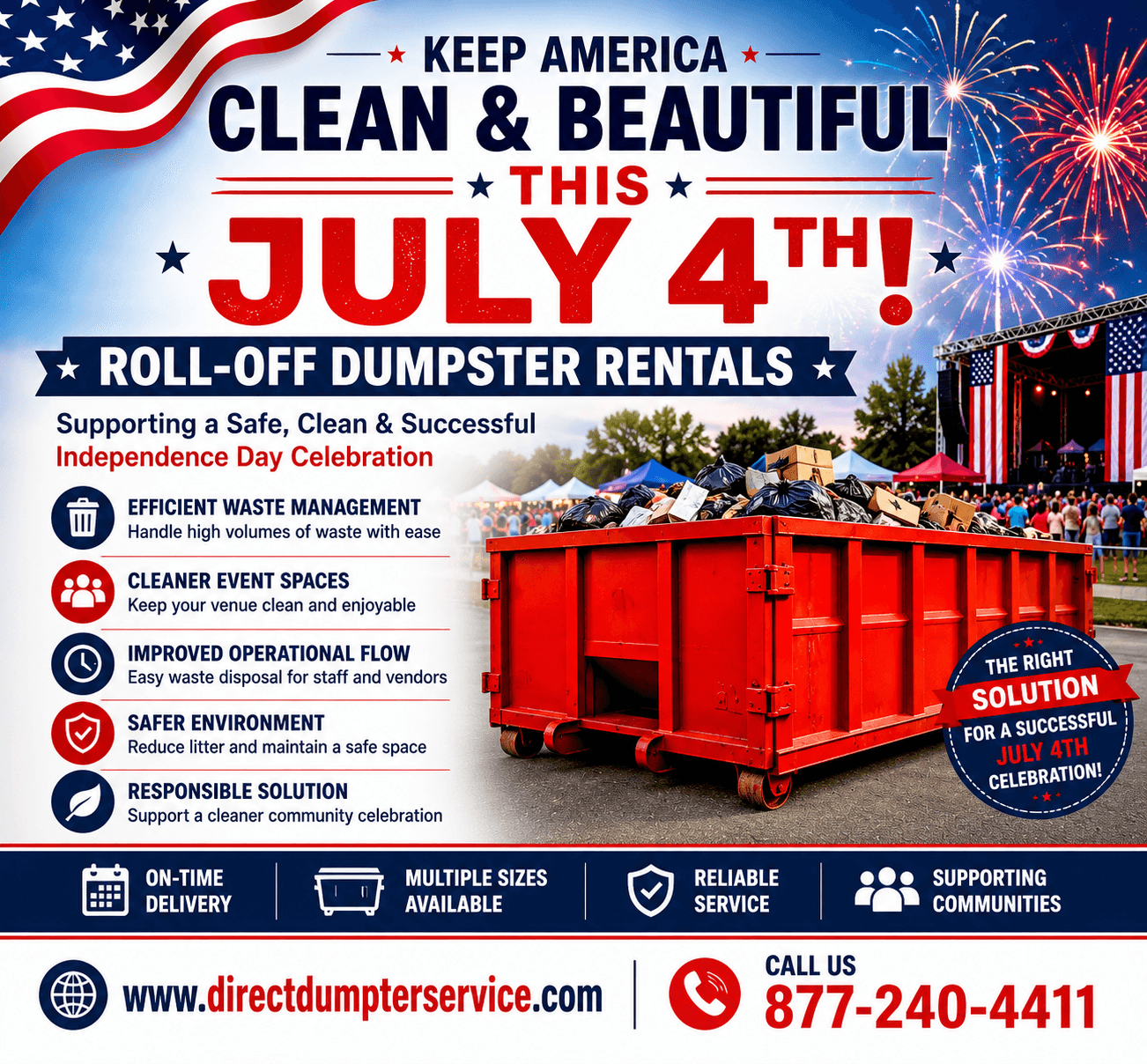
Case Study: Roll-Off Dumpster Rentals Helped Maintain Cleanliness During a July 4th Celebration
Background
Independence Day celebrations are among the largest community events held across the United States each year. Fireworks displays, parades, outdoor concerts, food festivals, and family activities attract thousands of attendees to parks, fairgrounds, waterfronts, and public spaces. While these celebrations focus on entertainment and community engagement, maintaining a clean and organized venue is equally important for ensuring a successful event.
This case study explores how roll-off dumpster rentals supported waste management operations during a large July 4th community celebration, helping organizers maintain site cleanliness before, during, and after the event.
Event Overview
A city-sponsored Independence Day festival was hosted at a regional park featuring live music performances, children's entertainment, food trucks, community vendors, recreational activities, and a large evening fireworks display.
The one-day event attracted approximately 18,000 visitors throughout the day. With multiple activity zones spread across the venue, organizers anticipated a substantial volume of waste generated from food packaging, beverage containers, vendor operations, promotional materials, and general public use.
The venue's existing waste collection infrastructure was insufficient to accommodate the expected increase in refuse, prompting organizers to incorporate roll-off dumpsters into the event's waste management strategy.
The Challenge
Several operational challenges were identified during the planning process:
High attendance throughout the day
Numerous food vendors and concession stands
Increased waste generation during meal periods
Large venue with multiple activity areas
Fireworks cleanup requirements
Limited permanent waste collection capacity
Need for efficient post-event restoration
Without additional waste collection resources, organizers anticipated overflowing trash receptacles, litter accumulation, and delays in cleanup activities after the celebration concluded.
Planning the Waste Management Strategy
Event planners developed a comprehensive waste management plan based on projected attendance, venue layout, vendor participation, and event duration.
Roll-off dumpsters were selected to provide centralized waste collection for operational teams while supporting routine removal of trash gathered from smaller receptacles located throughout the venue.
Planning focused on several objectives:
Maintaining a clean environment for attendees
Supporting continuous waste collection during the event
Preventing overflow of public trash bins
Improving operational efficiency for cleanup crews
Restoring the venue promptly following the celebration
Dumpster locations were carefully selected to maximize accessibility while remaining out of public gathering areas.
Implementation
Roll-off dumpsters were delivered and positioned before event setup began.
Strategic placement included:
Vendor service areas
Food court support zones
Event operations headquarters
Equipment staging locations
Maintenance access routes
Post-fireworks cleanup areas
Throughout the celebration, maintenance crews collected waste from public trash receptacles and transported it to the roll-off dumpsters. This process helped prevent overflowing bins and maintained a cleaner appearance across the venue.
Following the fireworks display, cleanup teams efficiently collected remaining debris and disposed of it using the centralized dumpsters before restoring the park.
Results
Cleaner Event Grounds
Routine waste collection prevented litter from accumulating in high-traffic areas. Public spaces remained cleaner throughout the day, contributing to a more enjoyable experience for attendees.
Improved Operational Efficiency
Maintenance crews benefited from centralized disposal locations, reducing the time required to transport waste and improving overall productivity.
Better Support for Food Vendors
Food vendors generated significant volumes of cardboard, packaging materials, and food waste. Nearby dumpster access allowed vendors to manage waste efficiently without disrupting customer service.
Faster Post-Event Cleanup
Once the fireworks concluded, cleanup operations were completed more efficiently because waste had been consolidated throughout the event. Restoration crews returned the venue to normal conditions in a shorter timeframe than previous years.
Enhanced Environmental Management
Organized waste collection reduced scattered litter and helped protect surrounding green spaces. Centralized disposal also simplified the collection and transportation of event-generated waste.
Lessons Learned
The event demonstrated several best practices for waste management during large Independence Day celebrations:
Estimate waste volumes based on expected attendance and vendor participation.
Position roll-off dumpsters in locations accessible to maintenance and vendor teams.
Schedule routine waste collection throughout the event rather than waiting until the conclusion.
Coordinate waste management with overall event logistics and cleanup planning.
Ensure sufficient disposal capacity for food service operations and fireworks-related cleanup.
Incorporate waste management into emergency and operational planning to maintain an organized venue.
Conclusion
This July 4th case study illustrates the important role roll-off dumpster rentals play in supporting successful outdoor events. By providing centralized waste collection and improving cleanup efficiency, organizers maintained a cleaner, safer, and more organized environment for approximately 18,000 attendees.
As Independence Day celebrations continue to grow in size and complexity, effective waste management remains a critical component of event planning. Roll-off dumpster rentals help support sanitation efforts, improve operational efficiency, and facilitate timely site restoration, contributing to a positive experience for attendees, vendors, volunteers, and event staff while preserving public event spaces for future community use.