
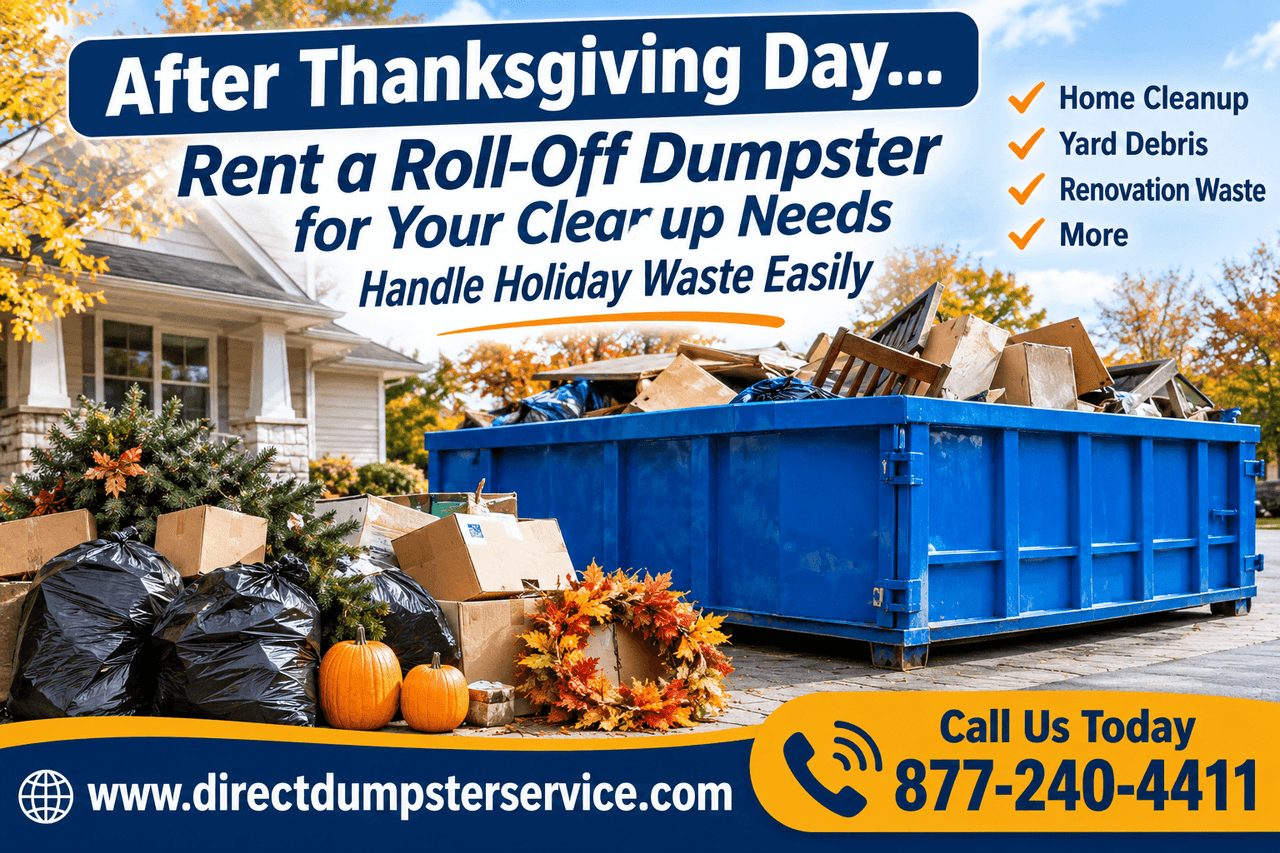
Thanksgiving Day is a time for family gatherings, cooking, decorating, and celebrating. However, once the holiday is over, homeowners, property managers, restaurants, and businesses often face a significant amount of waste. Leftover food packaging, cardboard boxes, disposable plates, damaged decorations, furniture, and other household materials can quickly fill regular garbage containers.
After Thanksgiving, cleaning up the property and managing accumulated waste becomes an important task. When ordinary trash collection is not enough, renting a roll-off dumpster can provide a practical way to handle larger quantities of waste. Understanding when a dumpster is needed, what size to choose, and how to arrange delivery can make post-holiday cleanup easier and more organized.
1. Why Is a Roll-Off Dumpster Needed After Thanksgiving Day?
Thanksgiving celebrations can generate more waste than a typical week. Preparing meals, hosting guests, and decorating homes all contribute to additional garbage.
Some common reasons for renting a roll-off dumpster after Thanksgiving include:
- Household cleanup: Food packaging, cardboard boxes, disposable kitchen supplies, and unwanted household items can accumulate.
- Furniture disposal: Families sometimes replace old furniture or remove damaged items before or after holiday gatherings.
- Yard cleanup: Fallen branches, leaves, outdoor decorations, and other seasonal debris may need to be removed.
- Home improvement projects: Some homeowners begin renovation, remodeling, or garage-cleaning projects during the holiday weekend.
- Business waste: Restaurants, retail stores, offices, and event venues may experience increased waste from Thanksgiving activities.
- Property maintenance: Landlords and property managers may need to clear unwanted materials before preparing a property for new occupants.
A roll-off dumpster provides a centralized place to collect acceptable waste instead of allowing debris to accumulate around the property.
2. What Types of Waste Accumulate After Thanksgiving?
The type of waste generated depends on the size of the gathering and the activities completed during the holiday.
Common post-Thanksgiving waste includes:
Waste category Examples
Packaging materials Cardboard boxes, wrapping paper, and shipping containers
Household waste Broken furniture, unwanted items, and damaged decorations
Kitchen cleanup Disposable plates, food packaging, and non-liquid food waste
Yard debris Leaves, branches, and seasonal outdoor decorations
Renovation debris Wood, drywall, flooring, and other construction materials
Business waste Retail packaging, event materials, and general commercial debris
Not every material can be placed in a roll-off dumpster. Hazardous chemicals, batteries, paint, tires, electronics, and certain appliances may require separate disposal arrangements. Always confirm accepted materials with the rental provider before loading the container.
3. How Do You Know When You Need a Roll-Off Dumpster?
Regular residential garbage collection may be sufficient for small amounts of holiday waste. However, larger cleanup projects often require additional capacity.
You may need a roll-off dumpster if:
- Your household garbage containers become full before the next collection day.
- You have several large cardboard boxes and bulky packaging materials.
- You are removing old furniture, cabinets, or household equipment.
- You are cleaning a garage, basement, attic, or storage area.
- Your renovation project generates more debris than expected.
- Your business produces additional waste after Thanksgiving events.
One important consideration is the volume of waste rather than simply the number of garbage bags. Large furniture, bulky packaging, and construction materials can occupy considerable container space.
4. What Dumpster Size Should You Choose After Thanksgiving?
Choosing the appropriate dumpster size helps prevent overfilling and unnecessary collection arrangements. Roll-off dumpsters are available in different capacities, depending on the project.
Here is a general guide to common dumpster sizes:
Dumpster size Suitable cleanup projects
10-yard Small household cleanup, garage cleaning, and limited debris
15-yard Moderate home cleanup and small renovation projects
20-yard Larger household cleanouts and remodeling waste
30-yard Extensive property cleanup and construction debris
40-yard Large commercial cleanouts and major construction projects
These are general guidelines. The correct size depends on the material type, debris volume, and weight restrictions. Heavy materials such as concrete, brick, and roofing shingles may require special container arrangements.
5. How Can You Get a Roll-Off Dumpster After Thanksgiving Day?
Arranging a dumpster after Thanksgiving involves several steps. Planning ahead can help avoid delays, especially when many households and businesses are scheduling cleanup services at the same time.
Step 1: Identify the cleanup requirements
Start by identifying what needs to be removed. Separate household garbage, cardboard, furniture, yard debris, and renovation materials. This helps determine the approximate dumpster capacity required.
Step 2: Estimate the amount of waste
Consider how many bags, boxes, furniture pieces, and other materials will be discarded. For larger projects, estimate the total volume rather than relying only on the number of items.
Step 3: Find dumpster rental providers in your area
Search for roll-off dumpster rental services that cover your ZIP code or property location. Check whether the provider services residential, commercial, or construction properties.
Step 4: Compare available dumpster sizes
Review the available container capacities and ask about weight limits. A dumpster that is too small may require an additional collection, while an oversized container may take up unnecessary space.
Step 5: Confirm delivery and pickup dates
Thanksgiving weekend can affect normal business schedules and waste collection operations. Confirm whether delivery is available on the date you need. Also establish how long the container can remain on the property.
Step 6: Prepare the delivery location
Choose a flat, accessible surface with sufficient clearance for the delivery truck. Remove parked vehicles and other obstacles. If the dumpster will be placed on a public street, check local permit requirements.
Step 7: Load the dumpster correctly
Distribute materials evenly and keep all debris below the container's fill line. Do not place prohibited materials inside. Follow the provider's loading and weight instructions.
6. When Should You Schedule a Dumpster After Thanksgiving?
The best time to arrange a dumpster depends on the amount of waste and the cleanup schedule.
Some homeowners begin cleaning immediately after Thanksgiving dinner, while others wait until the following weekend. Businesses may need containers as soon as holiday events or seasonal sales activities finish.
It is helpful to contact a rental provider several days before the expected cleanup date. This allows time to confirm container availability, delivery arrangements, and pickup scheduling.
Remember that Thanksgiving Day, Black Friday, and the following weekend may have different operating schedules. Do not assume that standard delivery and pickup services will operate during the holiday period.
7. What Should You Consider Before Renting a Dumpster?
Before arranging a roll-off dumpster, review several important details:
- Rental duration: Confirm how many days the container can remain at your property.
- Weight allowance: Understand the included tonnage and additional-weight charges.
- Accepted materials: Check disposal restrictions for furniture, appliances, electronics, and construction waste.
- Placement requirements: Ensure the delivery area is accessible and suitable for a roll-off truck.
- Local permits: Check municipal regulations for dumpsters placed on public streets or sidewalks.
- Pickup arrangements: Confirm how to request removal when the container is full.
- Weather conditions: Rain, snow, and wet debris can affect loading conditions and waste weight.
These details help prevent unexpected issues during the cleanup process.
8. Can You Use a Roll-Off Dumpster for Both Residential and Commercial Cleanup?
Yes. Roll-off dumpsters are used for many different types of post-Thanksgiving cleanup projects.
Residential customers may use them for garage cleanouts, furniture disposal, home renovations, and seasonal property maintenance.
Commercial customers, including restaurants, retail stores, offices, and event venues, may need larger containers for packaging waste, discarded materials, and general cleanup.
Construction contractors may also use roll-off dumpsters after completing renovation work or preparing properties for upcoming projects.
The main difference is the amount and type of waste generated. Residential projects may require smaller containers, while commercial and construction projects may need larger capacities and more frequent pickups.
9. What Happens If You Need More Time With Your Dumpster?
Sometimes post-Thanksgiving cleanup takes longer than expected. Homeowners may discover additional items to remove, or contractors may experience delays in completing renovation work.
If you need the dumpster for additional days, contact the rental provider before the scheduled pickup date. Ask whether the rental period can be extended and whether additional daily charges apply.
Planning the rental duration carefully can help prevent interruptions and allow enough time to finish the cleanup.
After Thanksgiving Day, managing accumulated waste is an important part of restoring homes, businesses, and commercial properties to their regular condition. Cardboard packaging, unwanted furniture, seasonal decorations, yard debris, and renovation materials can create more waste than ordinary garbage collection can handle.
A roll-off dumpster offers a convenient way to organize larger cleanup projects. By identifying the waste type, estimating the required capacity, checking local rental availability, and confirming delivery and pickup arrangements, homeowners and businesses can prepare for an efficient post-Thanksgiving cleanup.
Whether the project involves a small household cleanout or a large commercial property cleanup, selecting the right dumpster size and understanding disposal requirements are essential steps toward responsible waste management.